What’s Wrong with LED Light Bulbs?
- Summary: Would you rather eat natural, home-cooked food, or synthetic chemicals from a laboratory? If you’re like most Americans, you probably choose the latter ….
- That’s what LED light is: It’s un-natural light, made from a computer chip.
- SUNlight is the source of energy for the earth… and light (the entire spectrum) is an integral part of human biology.
- Synthetic light is junk food for our cells, and excessive exposure may have disastrous long-term health effects.
- Light governs our biological rhythms:
God made two great lights—the greater light to govern the day and the lesser light to govern the night.
- Human cells have receptors for light (not just our eyes!) and this light tells our cells when it is day, and when it is night.
- During the day, certain cellular processes are active. At night, many functions slow down. And other functions are active, such as cellular detox, and preparing to sleep. Certain hormones are high during the day (such as cortisol) and we produce melatonin at night. Melatonin is produced by the pineal gland, and is released. The lack of blue light is a signal to the pineal gland (in the brain) that it’s nighttime, and time to release melatonin, which sets the timeclock for the cells. Inter-cellular melatonin is a powerful antioxidant that protects cells from damage. How is melatonin produced? By mitochondria!
- If we’re exposed to blue light at night, it can disrupt our brain’s time clock (circadian rhythm). This can affect our sleep, but it can also result in hormone imbalances, insulin resistance, and set us up for chronic health problems. In ages past, we would sit around a campfire after dark (which provides red and infrared light, but very little blue light).
- We need very bright light (full spectrum) early in the morning to tell our brain that it’s time to start everything running again.
- INCANDESCENT BULBS
- In the early 1800’s, someone figured out that if you put electricity through a wire, it would emit light. Thomas Edison was the first person to make practical, commercial light-bulb using a carbon filament. This was demonstrated at the world’s fair in Chicago, which initiated the electrifying of the US. Unfortunately, Edison’s fragile carbon light could only work on 120 volts. In Europe, a more rugged filament was developed which could withstand higher voltage, which is why most of world still uses 240 volts today.
- Incandescence is similar to how the sun gives light. All matter transmits and receives energy (called Temperature). At higher temperatures, objects will emit more energy, and at a lower wavelength.
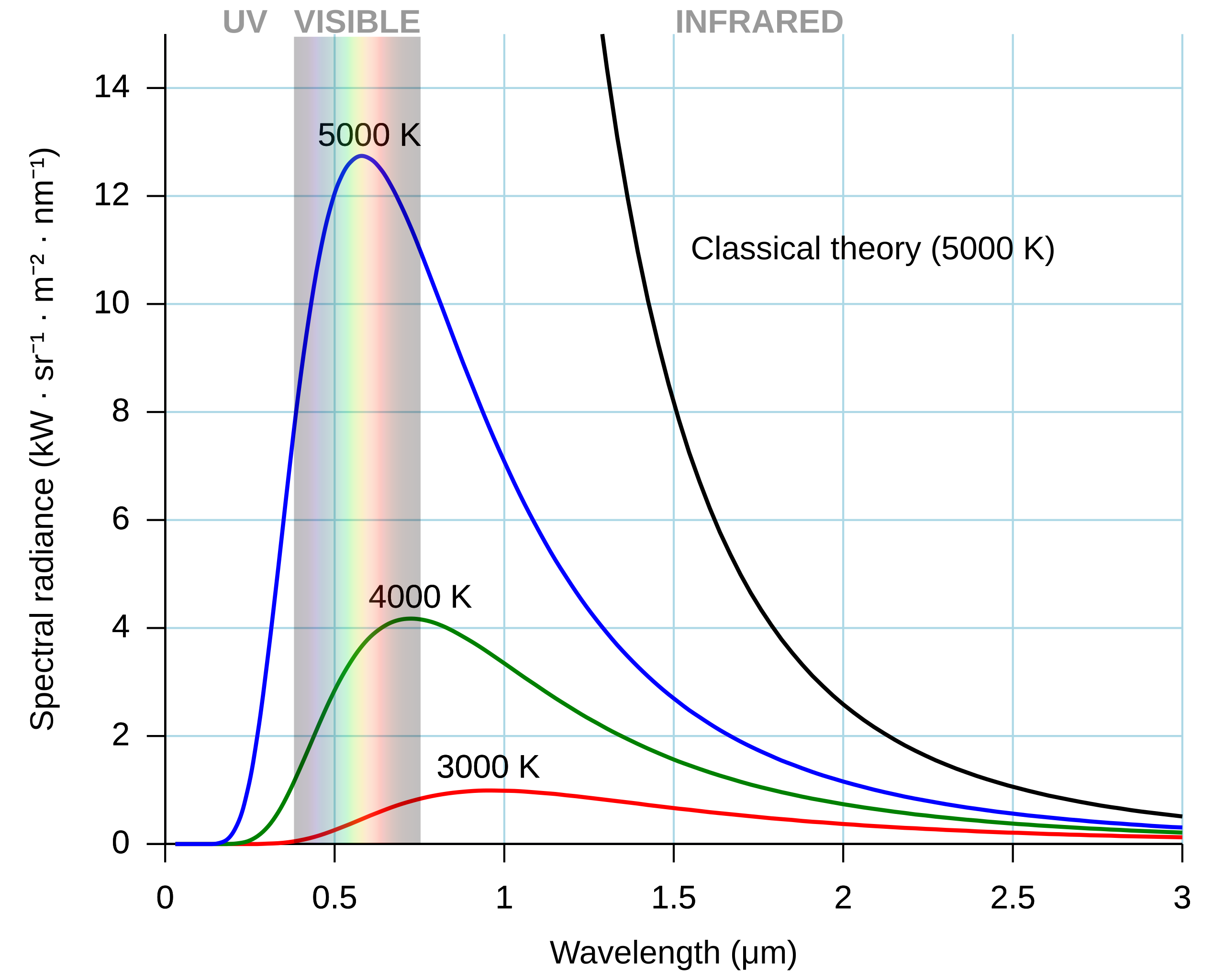
- Around 1900, Max Plank developed a theory of light, that became the basis of quantum theory. The surface of the sun is around 6000 degrees K. The peak of sunlight is the visible light spectrum, but a huge amount of energy is infrared. This infrared light is below the visible light spectrum, but is necessary for supporting our mitochondria.
- Humans get cellular energy mostly from our mitochondria. Mitochondria, as we know, make energy out of fat, carbohydrates, and protein. But mitochondria are also influenced by light. It’s as if we have solar panels to charge our cellular batteries. Exposure to bright long-wavelength light makes our mitochondria more active. Blue light, by itself, will cause mitochondria to slow down and get weaker. Weak mitochondria results in cells becoming weak, and not being able to work as well.
- If the cells are weak, organs and immune systems will also be weak.
Light Bulb “Energy Efficiency” Ratings Are Bogus🤡
- The efficiency rating of a light bulb assumes that we know what it’s good for. You can’t say that LEDs are more efficient than incandescent lights, unless you assume that long wavelengths of light serve no purpose.
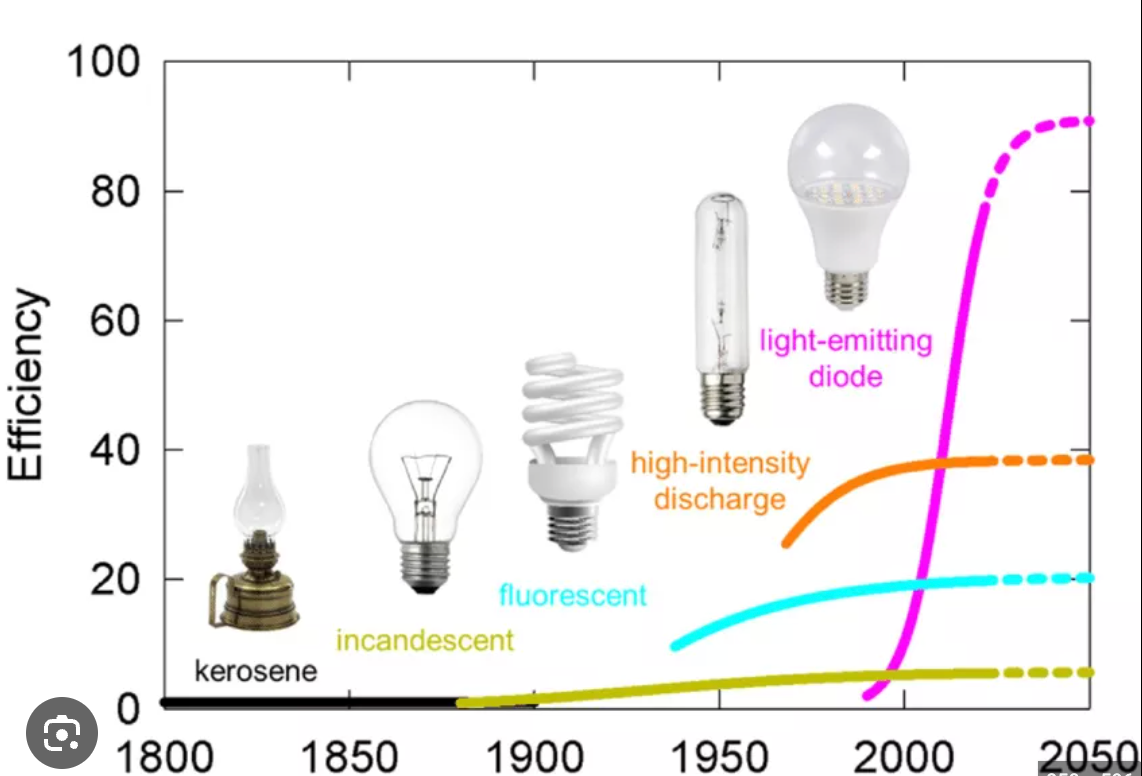
- In a natural environment, humans are outside in the sun, receiving ALL wavelengths of light. At night, we come inside, we build a fire and cook our food over a hot stove. We warm with a fireplace. Red and infrared light is vital for the health of human mitochondria, and supports metabolic function. Infrared light therapy devices are used in medicine, to heal wounds faster, reduce inflammation, and reduce wrinkles. When animals are exposed to natural, long-wavelength light, they live longer, and are more healthy. Animals exposed to only blue (short-wavelength) get sicker, as the mitochondria begin to slow down.
- We get older as our mitochondria get weaker. Weak mitochondria and aging are synonymous. If we can keep our mitochondria healthy, we will stay young. Damage to mitochondria is a result of many factors, but healthy light is an important factor. Most chronic diseases involve ineffective energy metabolism.
- The disadvantage of incandescent light bulbs are the high energy usage and short life. The advantage is that they have no flicker, and have a natural light that’s more similar to the sunlight.
- Many of the downsides of incandescent lights have been solved by halogen lights. Halogen lights use a gas that increases the lifespan of the bulb, and allows greater efficiency.
- Good quality fluorescent lights have high light output and long life, with no flicker. Inexpensive fluorescent lights may have a flicker. Fluorescent lights contain mercury, so need to be disposed of appropriately. The government is phasing out the use of fluorescent lights.
- The Biden administration began phasing out incandescent light bulbs, to save the environment 🙈, but this policy is being reversed. See the links below.
- It’s wintertime here in Missouri, so I heat my house with an infrared radiant propane heater. I’m getting the advantage of intense long-wavelength light. There might be a tiny amount of carbon monoxide released, but it’s not enough for my professional CO meter to detect.
- High pressure sodium lights are ideal for street lights (outdoors). They have a red-orange color, with almost no blue light.
Is it possible to make a healthy LED light?
- LED light bulbs use a switching power supply to convert 120 volts AC to low-voltage of DC. Switching power supplies produce periodic spikes in current. These current pulses cause dirty electricity, as the electrical wiring radiates electromagnetic energy. A better quality power supply will use a filter circuit to smooth the incoming power. However, this requires a few more electrical components, which raises the manufacturing cost by a few pennies. So most companies just don’t do it.
- To save money, most cheap bulbs use a single blue LED driver to produce light, and a single coating of a yellow phosphor. Blue + yellow make green, so the result appears white. Better companies use red, green, and blue LEDs, and multiple coatings of different tints to filter the light, and a computer chip to balance the color. Our eyes perceive a natural-looking spectrum. Unfortunately, it costs more money to mass-produce, and the energy efficiency is slightly lower.
- Many LEDs have a visible flicker. This is because unscrupulous manufacturers mass-produce these products with the cheapest components that they can possibly find. This flicker causes stress to our nervous system, confuses our brain, and can trigger epileptic seizures. Better quality lights have no flicker. But, at a higher cost.
- Even if the color balance were correct, and flicker eliminated, it’s still devoid of long-wavelength light (near and far infrared), which we would naturally get from the sun, or the warmth of a fire.
- Personally, I use high-quality LED lights to supplement the natural sunlight and incandescent lights. I also use an infrared light therapy device in the morning (I have an affiliate link to a company that sells these). After dark, I use blue-blocking sunglasses, and turn on 2800K amber lights (which have no blue light). During the day I try to get outside in natural sunlight as much as possible.
- Was your house built in the last 50 years? Your windows probably have coatings to block UV light and infrared light. In other words, many of the health-promoting light frequencies are partly blocked by ordinary window glass.
- What brands of lights are best?
- I haven’t tested very many, so I can’t recommend a brand. BlockBlueLight and Philips Hue are two brands that use better quality LED lights, which could be used to supplement incandescent lights, or natural sunlight.
- Incandescent bulbs, uncoated
Scripture references are NIV by Biblica, Inc.®
References:
too many to list, but start here: https://youtu.be/iT8W6kaD-RA?si=VSkzUe2ianyFqvAn